
The Pet Project Pictures Investigation Unit tackles their most delicious case yet
Imagine walking into a crowded room and asking a simple question: "Who invented pizza?" Within seconds, chaos erupts. Italians gesture passionately, waving their hands as they recount tales of Neapolitan masters. Greeks scroll frantically through their phones, pulling up images of ancient pottery depicting flatbreads topped with olives and herbs. Americans confidently declare that pizza wouldn't exist without them (after all, they made it a global phenomenon). And somewhere, a food historian is quietly weeping into their textbook.
The truth is, the origin of pizza is one of culinary history's most enduring mysteries. It's a cold case that has divided families, sparked international debates, and inspired countless late-night internet arguments.
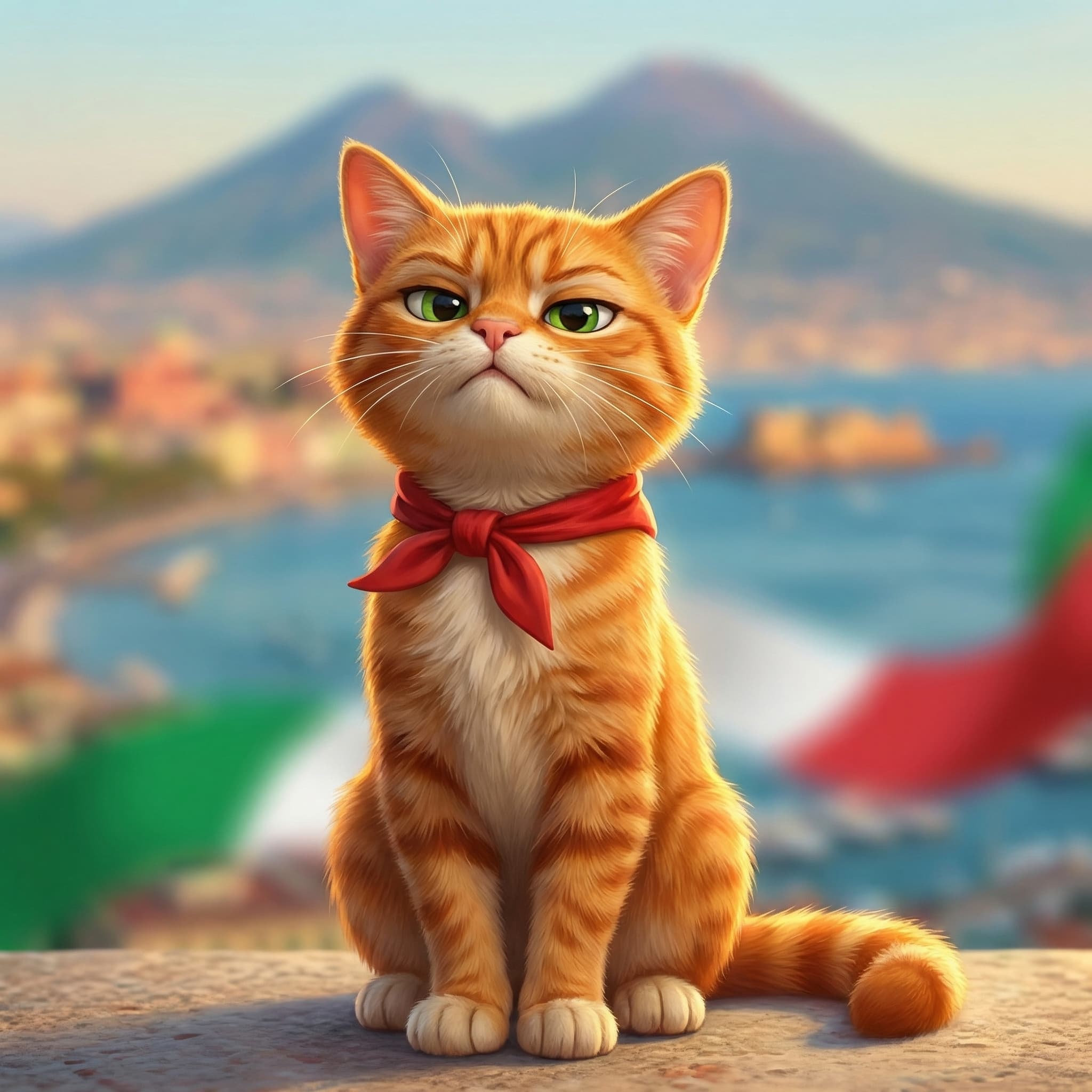
“It's obviously Italian. Naples, 18th century. Case closed. This conversation is beneath me.”

“But Bruno! The Greeks were eating topped flatbreads THOUSANDS of years before Italy even existed! You can't just ignore that!”
At Pet Project Pictures, we became obsessed with this mystery after watching our own researchers—@Bruno, a cat with strong Italian sympathies, and @Richard, a dog loyal to his Greek ancestors—nearly come to paws over the question. Their heated debate raised more questions than it answered:
- Did the Greeks invent pizza thousands of years before Italy existed?
- Did Naples create something genuinely new in the 18th century?
- What role did the tomato—a fruit from the Americas—play in this story?
- And most importantly: Does any culture truly "own" a dish?
In this story, we'll investigate the evidence like culinary detectives. We'll examine ancient texts, follow the trail of ingredients across oceans, and explore how a simple flatbread became the world's most beloved food. Along the way, we'll challenge your assumptions, present surprising facts, and maybe—just maybe—help you decide where you stand.
But fair warning: by the end, you may have more questions than answers. That's the nature of a good mystery.
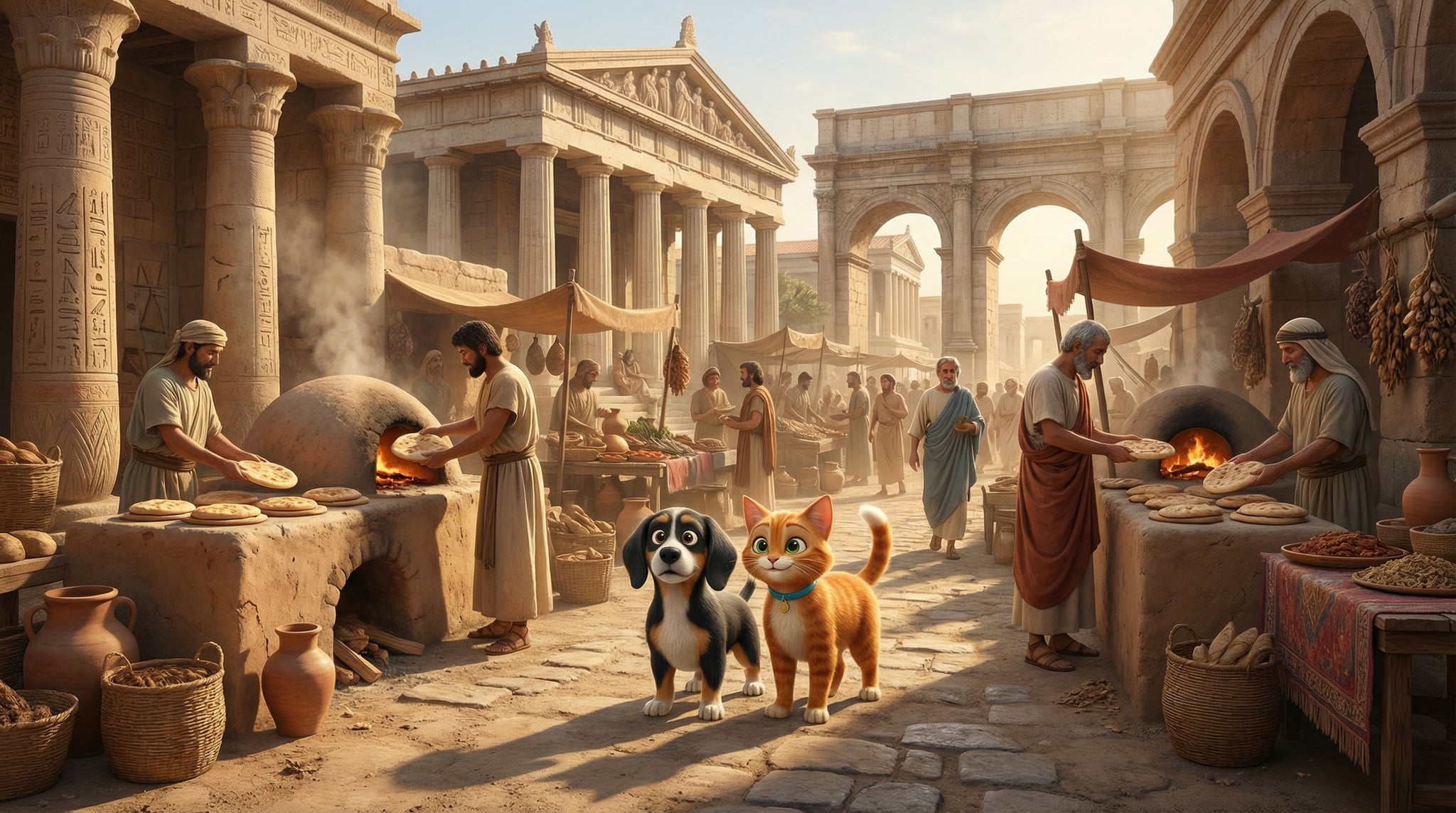
Before Pizza, There Was Bread
Let's start with a fundamental truth: humans have been baking bread for approximately 30,000 years. Long before we had written language, before we domesticated animals, before we built cities, we were grinding grains, mixing them with water, and cooking the resulting paste on hot stones.
These early flatbreads weren't fancy. They were survival food—calories that could be carried, stored, and eaten without utensils. But somewhere along the way, someone had an idea that would change culinary history forever: "What if I put something on top?"
The Egyptian Connection
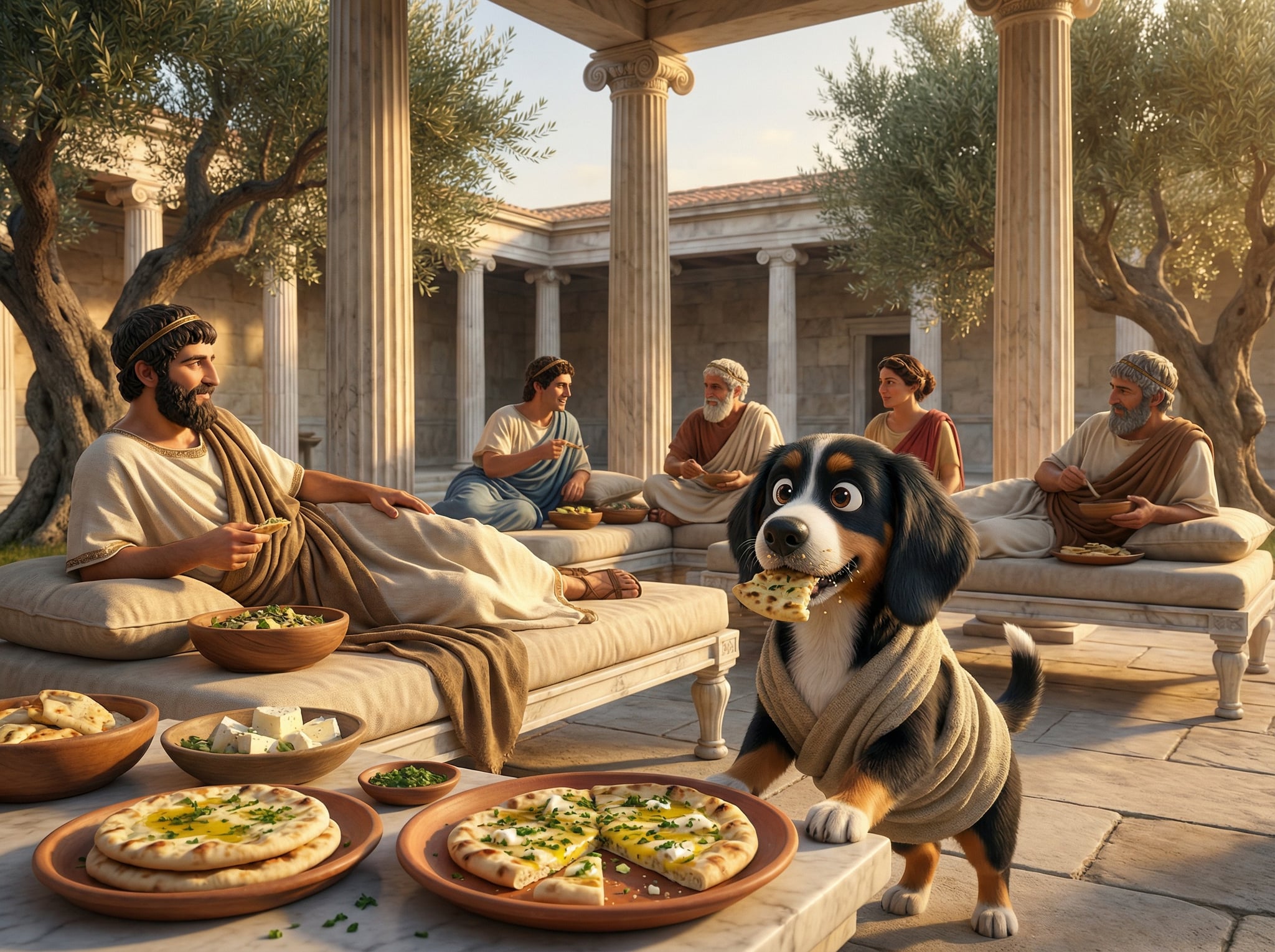
The earliest evidence of topped bread comes from ancient Egypt. Tomb paintings from the Old Kingdom (circa 2500 BCE) depict workers being fed flatbreads topped with what appear to be vegetables and possibly meat. The Egyptians also developed advanced baking techniques, including dome-shaped ovens that could reach high temperatures—not unlike the wood-fired ovens used in Naples thousands of years later.
Interesting Fact
The Egyptian word for bread was "ta," which also meant "life." Bread was so central to Egyptian culture that it was used as currency to pay workers, including the laborers who built the pyramids.

The Greek Innovation
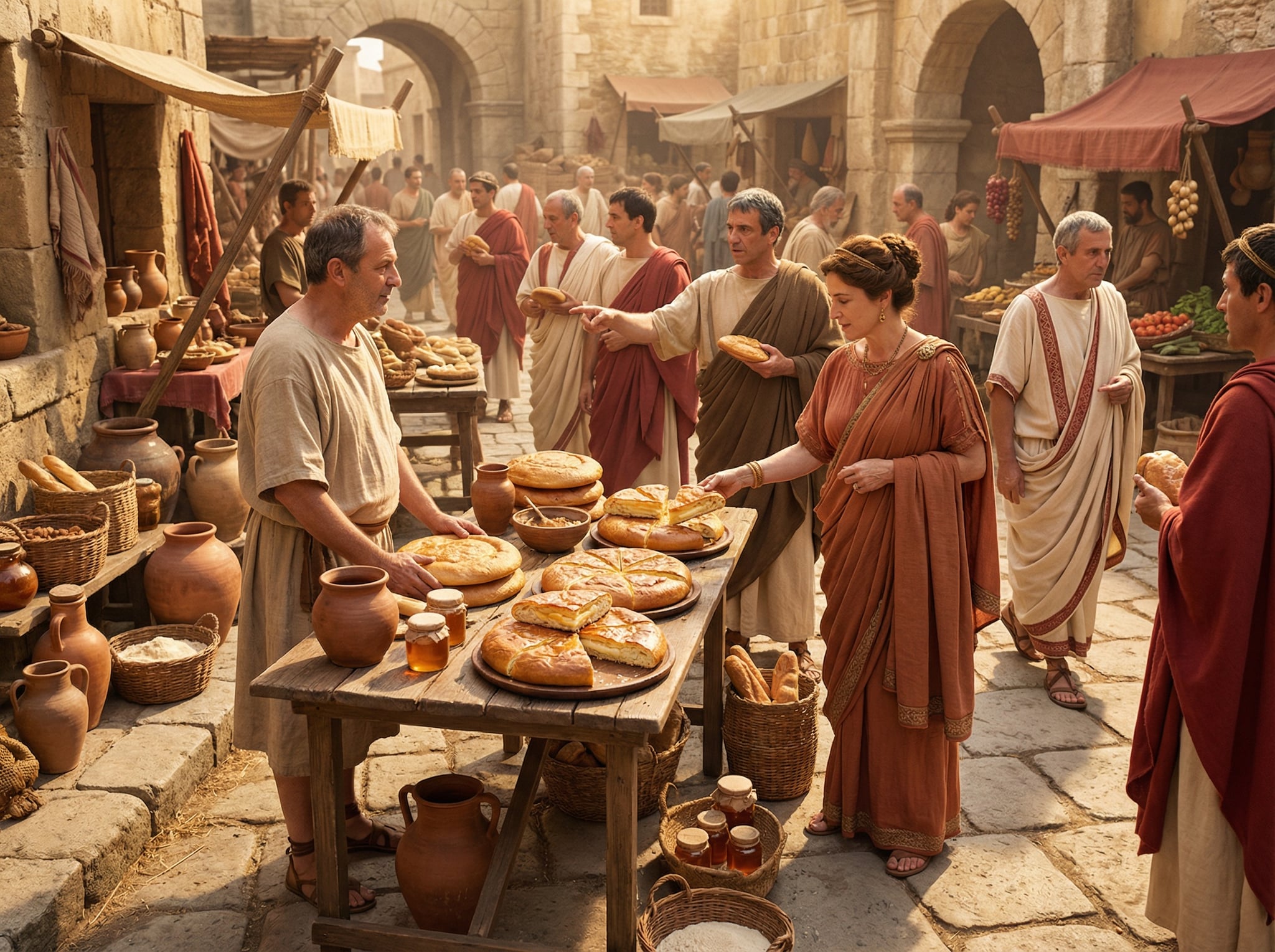
The ancient Greeks elevated flatbread to something approaching art. They called their version "plakous" (πλακοῦς), meaning "flat thing." But it was anything but simple.
Greek plakous was typically made from flour, water, and salt, then topped with olive oil, herbs, garlic, and onions. Wealthier Greeks added cheese—often a soft, briny cheese similar to modern feta—and honey. The dish was served at symposia, those famous Greek drinking parties where philosophers debated, poets recited, and politicians schemed.
Here's where it gets interesting: the Greeks also developed a dish called "lagana," a thin, unleavened flatbread that was sometimes fried and layered with toppings. Sound familiar? The word "lagana" is the direct ancestor of the Italian word "lasagna."
Self-Check Question
If the Greeks had a word that evolved into "lasagna," and they were eating topped flatbreads thousands of years ago, does that make pizza Greek by ancestry?
The Roman Adaptation
The Romans, as they did with so many things, borrowed Greek culinary traditions and made them their own. They called their version "placenta" (yes, that word existed long before it referred to an organ). Roman placenta was a flatbread often topped with cheese and honey, then baked until golden.
The Roman cookbook Apicius, dating to the 1st century CE, contains recipes for something called "offella," which involved topping bread with various ingredients and baking it. While not identical to modern pizza, the DNA is unmistakably there.
But here's the crucial detail: none of these ancient dishes included tomatoes. Because tomatoes didn't exist in Europe yet. They were about to embark on a journey that would change everything.

A Fruit Without a Home
Imagine Italian cuisine without tomatoes. No marinara sauce. No pomodoro. No pizza Margherita. It's almost unthinkable today, but for most of Italian history, that was reality.
The tomato is native to South America, specifically the Andes region of modern-day Peru and Ecuador. Wild tomatoes were small, yellow, and intensely flavored—nothing like the plump red fruits we know today. They were domesticated in Mexico by the Aztecs and other Mesoamerican civilizations, who called them "tomatl."
When Spanish conquistadors arrived in the Americas in the 16th century, they encountered this strange fruit and brought it back to Europe. The first written description of a tomato in Europe appeared in 1544, when Italian herbalist Pietro Andrea Mattioli described it as a "golden apple" (pomo d'oro).
Interesting Fact
The tomato's Latin name, Solanum lycopersicum, means "wolf peach." The "wolf" part comes from the ancient belief that tomatoes were poisonous (they belong to the nightshade family, which includes deadly plants). The "peach" part refers to their round shape and fuzzy skin.
The Poison Panic

For decades after their arrival in Europe, tomatoes were treated with deep suspicion. They were grown as ornamental plants, admired for their bright colors but rarely eaten.
Why? Because wealthy Europeans ate from pewter plates, which were high in lead. The acidity of tomatoes would leach lead from the plates, causing slow lead poisoning. People noticed that those who ate tomatoes got sick, and they drew the obvious (but wrong) conclusion: tomatoes themselves were toxic.
Poor people, who couldn't afford pewter plates, ate tomatoes from wooden bowls and suffered no ill effects. But it took centuries for the tomato to shed its poisonous reputation.
The Tomato Finally Gets Respect
By the 18th century, tomatoes had gained widespread acceptance in southern Italy, particularly in the region around Naples. The warm climate and volcanic soil proved perfect for tomato cultivation. Cooks began experimenting, discovering that tomatoes could be cooked down into rich sauces, dried for winter storage, or eaten fresh with olive oil and basil.
This was the missing piece. The ancient Greeks had flatbread. The Romans had cheese. But without the tomato, they didn't have pizza—at least not the pizza we know today.
Riddle for You
I came from the Andes, crossed the ocean in a ship, Was called a wolf peach and feared for my poisonous tip. The poor ate me safely, the rich ate me ill, Now I'm the heart of every pizza, the soul of every meal. What am I?
The City That Made Pizza Famous
To understand pizza's transformation from ancient flatbread to global phenomenon, we have to go to Naples in the 18th and 19th centuries.
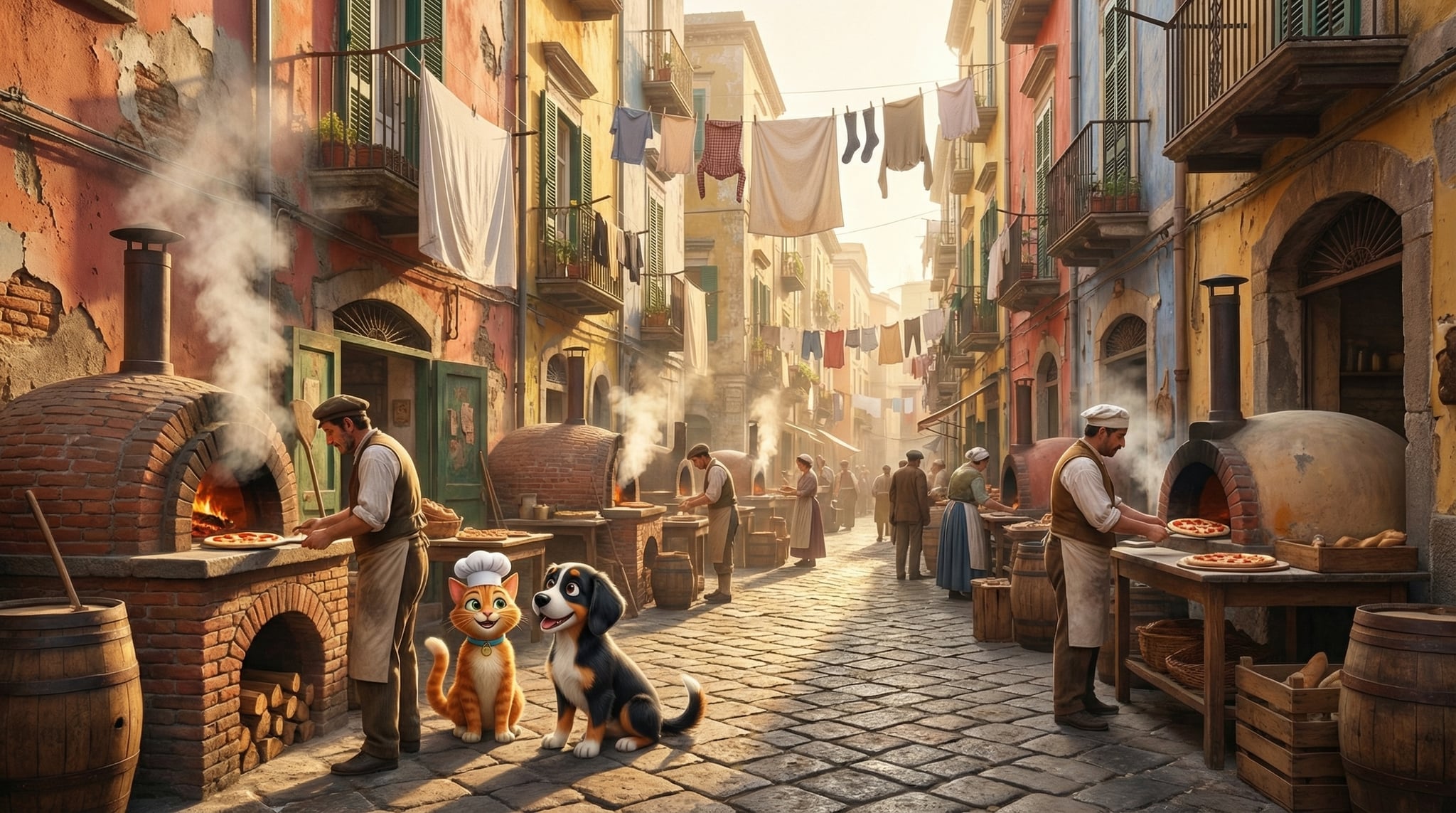
Naples was Europe's largest city, a chaotic, vibrant port teeming with people from across the Mediterranean. It was also desperately poor. The city's lower classes, known as lazzaroni (from the word "Lazarus," meaning beggars), lived in crowded conditions with no kitchens of their own. They needed food that was cheap, filling, and could be eaten on the street.
Street vendors responded. They set up stands selling flatbreads topped with whatever was available: tomatoes, cheese, garlic, anchovies, oil. These early pizzas weren't fancy. They were fast food for the working poor.
Interesting Fact
The word "pizza" may derive from several sources. Some linguists trace it to the Greek word "pitta" (flatbread). Others point to the Latin word "picea" (referring to the blackening of bread in an oven). Still others suggest it comes from the Lombardic word "bizzo" or "pizzo," meaning "bite" or "morsel."
The Royal Endorsement
Every food needs its moment. For pizza, that moment came in 1889.
The moment pizza went from street food to national treasure
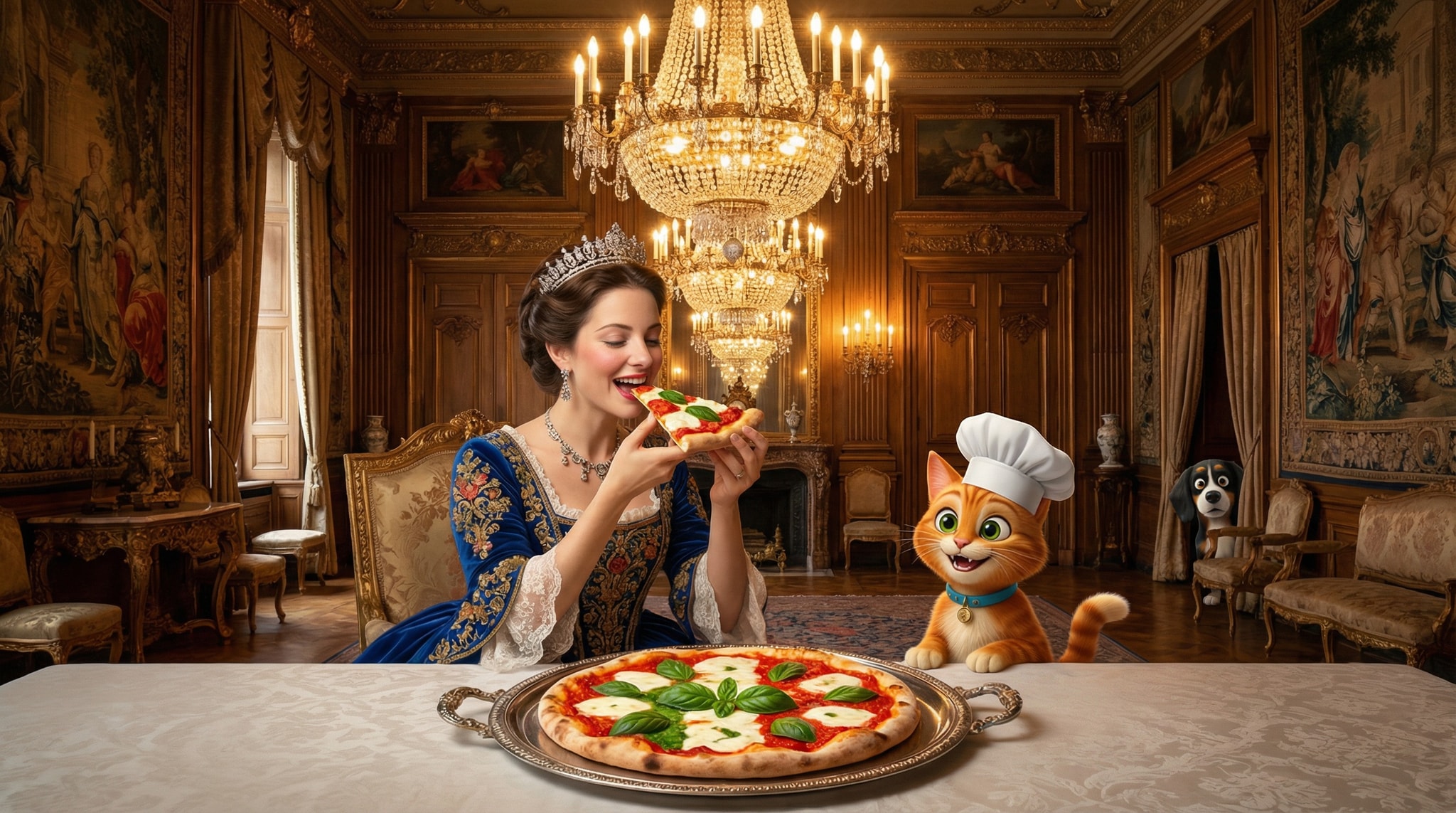
King Umberto I and Queen Margherita of Italy were visiting Naples and grew tired of the elaborate French cuisine served at court. They summoned the most famous pizzaiolo in Naples, Raffaele Esposito, to prepare an assortment of pizzas for the queen.
Esposito created three pizzas:
- One with lard, caciocavallo cheese, and basil
- One with garlic, oil, and tomatoes
- One with tomatoes, mozzarella, and basil
The queen's favorite was the third, with its colors echoing the Italian flag: red (tomato), white (mozzarella), and green (basil). Esposito named it Pizza Margherita in her honor, and a legend was born.
Did this actually happen? Most historians believe yes, though some details may have been embellished over time. What's certain is that the royal seal of approval elevated pizza from street food to something worthy of national pride.
The Rules Are Written
Today, true Neapolitan pizza is protected by law. The Associazione Verace Pizza Napoletana (True Neapolitan Pizza Association) has established strict rules:
- The dough must be made from Italian 00 flour, water, salt, and yeast.
- It must be kneaded by hand or with a low-speed mixer.
- It must rise for at least 8 hours.
- It must be stretched by hand—no rolling pins allowed.
- It must be cooked in a wood-fired oven at 900°F for no more than 90 seconds.
- The finished pizza must have a raised, charred crust (cornicione) and a soft, elastic center.
Pizzas that follow these rules can be certified as "Verace Pizza Napoletana." Everything else is... something else.
Self-Check Question
If a pizza follows all these rules but is made outside of Italy, is it still "authentic" Neapolitan pizza? Or does geography matter as much as technique?

Pizza Crosses the Atlantic
The late 19th and early 20th centuries saw millions of Italians emigrate to the Americas. They brought their language, their culture, and their food—including pizza.
The first pizzeria in the United States opened in New York City in 1905. Gennaro Lombardi opened Lombardi's on Spring Street, and it's still operating today (though not at the original location). For decades, pizza remained an ethnic food, eaten primarily by Italian immigrants and their descendants.
Interesting Fact
American soldiers stationed in Italy during World War II discovered pizza and brought their enthusiasm for it back home. This post-war exposure helped launch pizza's transformation from ethnic curiosity to mainstream American food.
American Pizza Evolves
As pizza spread across the United States, it adapted to local tastes and ingredients.
- New York-style pizza: Thin, foldable crust, hand-tossed, cooked in gas ovens. Perfect for eating on the go.
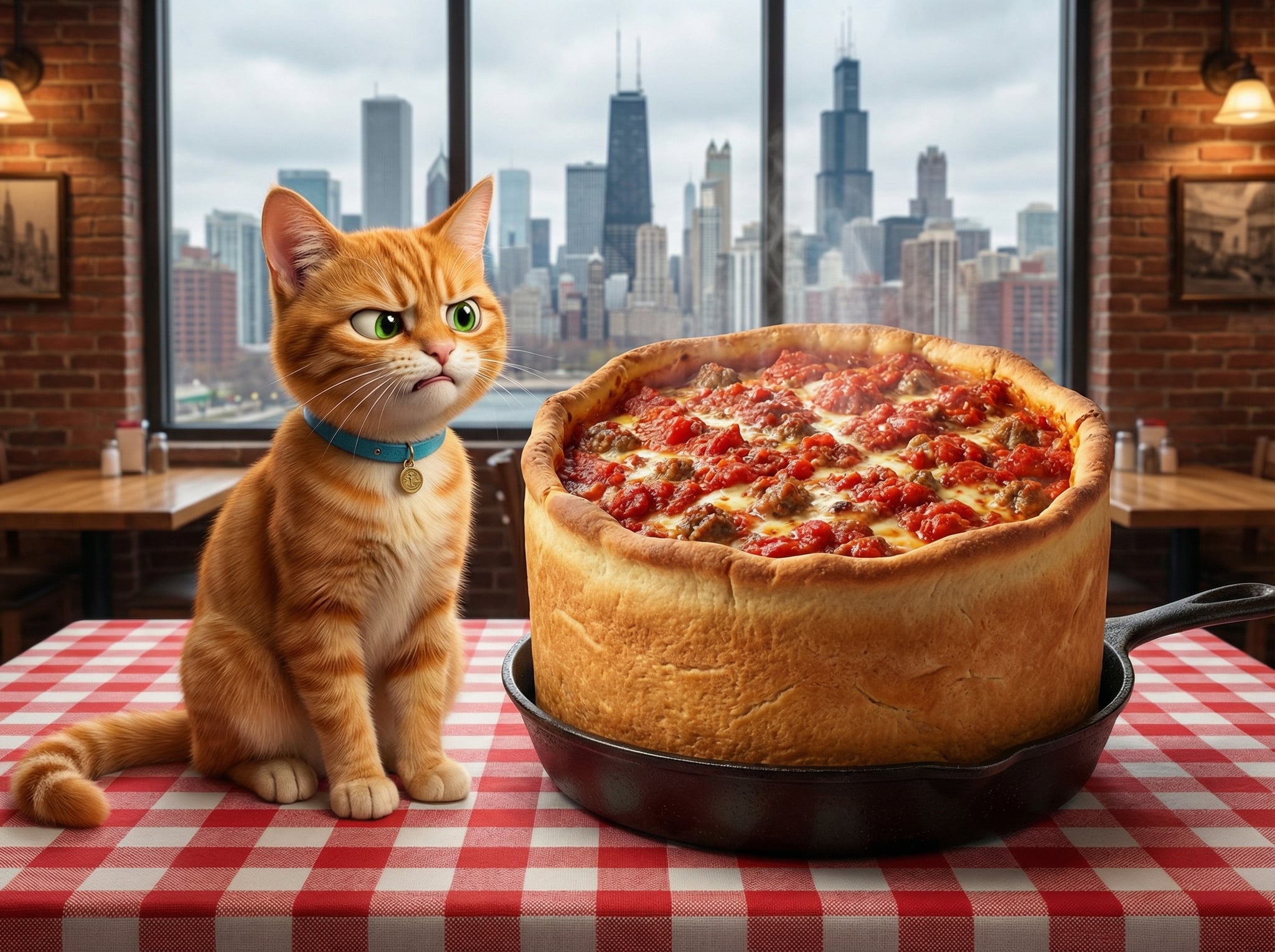
- Chicago deep-dish: More like a pizza pie than a flatbread. A high-edged crust filled with cheese, toppings, and chunky tomato sauce—in that order.
- New Haven-style: Thin, oblong crust with a distinctive char. White clam pizza is the local specialty.
- Detroit-style: Rectangular, thick crust with cheese caramelized on the edges, sauce on top.
- St. Louis-style: Ultra-thin crust made without yeast, cut into squares rather than wedges. Uses Provel cheese instead of mozzarella.
Each of these styles has passionate defenders who insist their version is the "real" pizza. Sound familiar?

Pizza Goes Global
Today, pizza is truly global. And every country that embraces it puts its own spin on the concept:
| Country | Unique Topping or Style |
|---|---|
| Japan | Mayo-jaga (mayonnaise, potato, bacon), squid, corn |
| Brazil | Green peas, hard-boiled eggs, catupiry cheese |
| Sweden | Banana and curry powder |
| Australia | "Aussie" pizza with ham, bacon, and egg |
| India | Pickled ginger, paneer, tandoori chicken |
| France | Flammekueche (thin crust with cream, onions, bacon) |
| Turkey | Lahmacun (thin crust with spiced meat, herbs) |
| Russia | "Mockba" pizza with sardines, tuna, mackerel, salmon |
| Costa Rica | Coconut |
| Germany | Tuna and onions (very popular) |
Would a Neapolitan pizzaiolo recognize these as pizza? Probably not. But the people who make and eat them call them pizza, and that counts for something.
Riddle for You
I'm round in Naples, square in Detroit, Foldable in New York, deep as a pie in Chicago's employ. I wear cheese on top or sometimes below, I'm loved by millions wherever I go. What am I?
Can Anyone Own a Recipe?
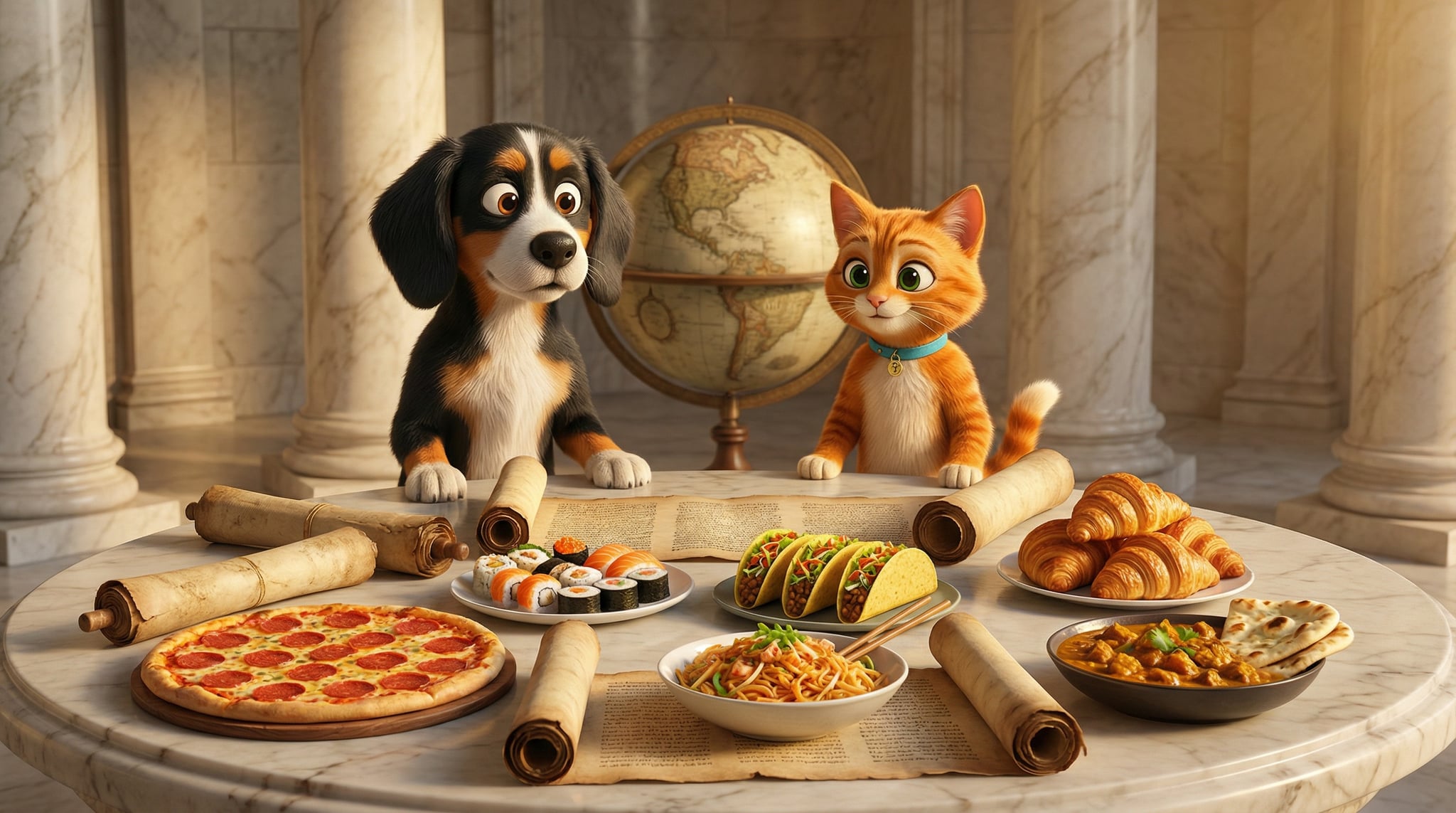
This is the heart of the pizza debate—and it's a question that extends far beyond a single dish.
When we ask "Who invented pizza?" we're really asking several deeper questions:
- Does the first appearance of a similar concept count as invention?
- Does the person who perfects and popularizes a dish deserve credit?
- Can a dish belong to a culture, or is all food ultimately borrowed and adapted?
Consider these examples:
- Pad Thai: Thailand's national dish was actually created in the 1930s as part of a government campaign to promote Thai identity. Before that, something similar existed, but not by that name. Who "invented" it?
- Vindaloo: This iconic Indian dish originated in Goa with Portuguese colonizers, who brought their "carne de vinha d'alhos" (meat in wine and garlic) recipe. Indians adapted it, adding local spices and vinegar. Is it Portuguese or Indian?
- Croissant: The quintessential French pastry actually originated in Austria as "kipferl." An Austrian baker brought it to France, where it evolved into the flaky, buttery croissant we know today. French or Austrian?
Interesting Fact
The word "croissant" means "crescent" in French, referring to its shape. The Austrian kipferl was also crescent-shaped, possibly inspired by the Ottoman siege of Vienna (the crescent was a symbol on the Ottoman flag).
The UNESCO Approach
UNESCO, the United Nations' cultural organization, maintains lists of "Intangible Cultural Heritage"—traditions, practices, and knowledge that deserve protection.
In 2017, UNESCO added the "Art of the Neapolitan Pizzaiuolo" to its list. The designation specifically honors the cultural practice of pizza-making in Naples, including the gestures, songs, and social traditions that surround it.
Notice what UNESCO didn't do: they didn't declare that pizza was "invented" in Naples. They recognized that a specific cultural practice—the art of making pizza the Neapolitan way—is valuable and worth preserving.
This is a subtle but important distinction.
Self-Check Question
If the Neapolitan pizzaiuolo tradition is protected heritage, does that mean pizza made outside Naples is somehow "less authentic"? Or does it simply mean that different pizza traditions can coexist?
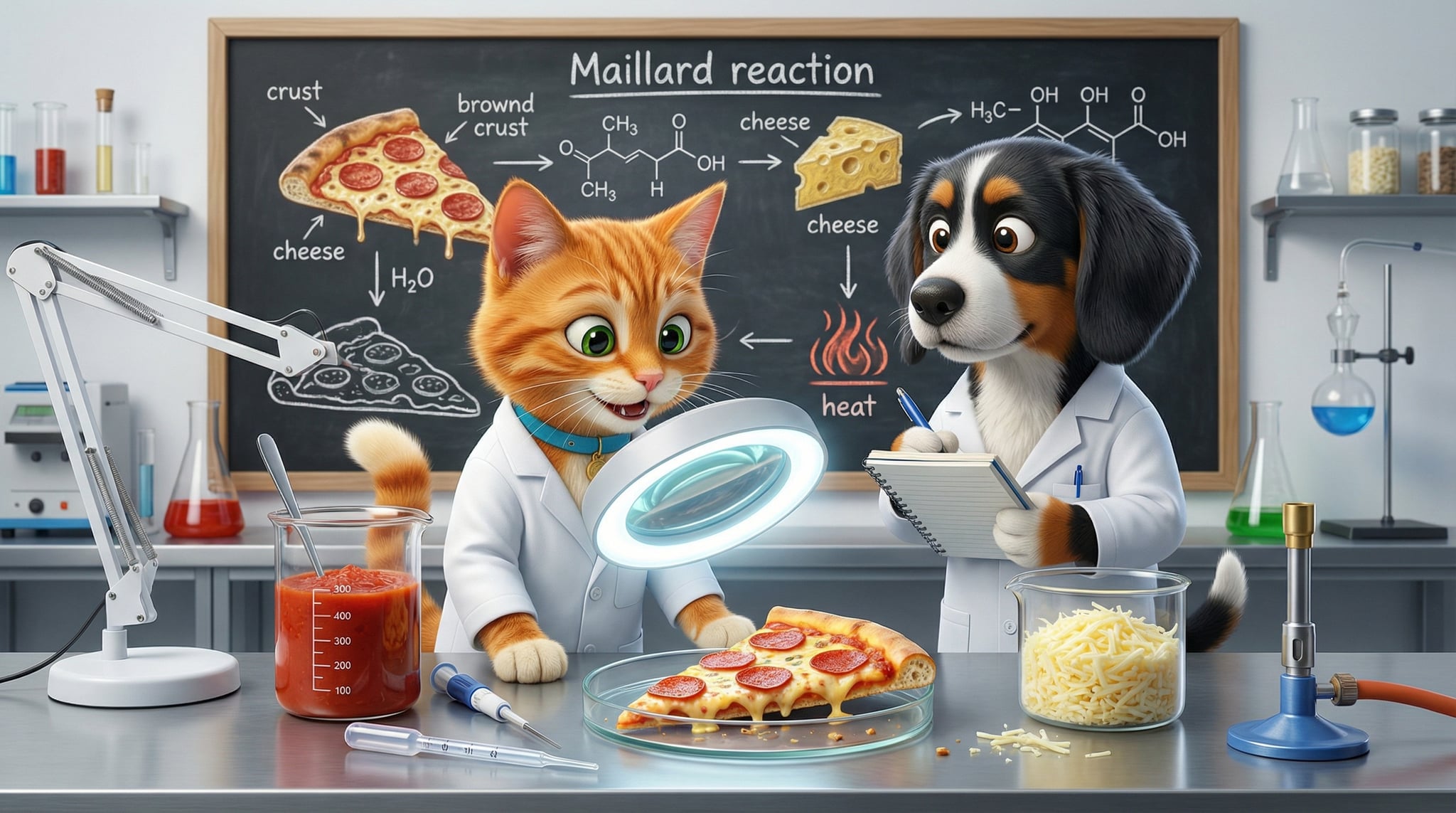
Why Pizza Works: The Chemistry
There's a reason pizza has conquered the world: it's scientifically designed to be delicious.
The perfect pizza is a study in contrasts:
- Crust: Chewy yet crisp, with air bubbles that trap steam and create texture
- Sauce: Acidic tomatoes balanced by the fat of cheese and oil
- Cheese: Stretchy mozzarella that browns without burning
- Toppings: Salty, sweet, spicy, or savory—endless possibilities
The Maillard reaction—the chemical process that creates browning and complex flavors—occurs beautifully on pizza crust. The high heat of a wood-fired oven caramelizes sugars and creates compounds that our brains interpret as "delicious."
Interesting Fact
The stretchiness of mozzarella comes from its protein structure. When heated, the proteins align and form long chains that can stretch without breaking. This is why a properly made cheese pull is so satisfying—and so photogenic.
The Perfect Slice: A Mathematical Question
If you've ever argued about whether to cut pizza into squares or triangles, you're participating in a centuries-old debate.
- Wedges (triangles): Traditional in Naples and most of Italy. Each slice has a crust edge and a pointy tip, offering variety in each bite.
- Squares: Common in Roman-style "pizza al taglio" (pizza by the cut). Also popular in Detroit and Chicago for thick-crust pizzas.
- Party cut (grid of small squares): Popular in the American Midwest for thin-crust pizzas. Maximizes the number of crust-edge pieces.
Mathematically, the party cut creates more total surface area exposed to air, which can cause the pizza to cool faster. But it also creates more pieces, making it easier to share with a large group.
Riddle for You
I'm a number that pizza loves, a constant you can't escape, Divide a circle by me and you'll get a perfect shape. I'm approximately 3.14, but that's just part of my tale, Without me, you couldn't measure a slice—your math would surely fail. What am I?

How to Investigate Your Own Food Mysteries
Inspired by @Bruno and @Richard's investigation? Here's how you can become a culinary detective in your own kitchen.
Tool #1: The Ingredient Timeline
For any dish, create a timeline of when each key ingredient became available in the region where the dish supposedly originated.
- When did wheat cultivation begin?
- When did cheese-making develop?
- When did tomatoes arrive from the Americas?
- When did the specific combination first appear in written records?
This simple exercise often reveals surprising gaps. You might discover that a "traditional" dish is actually much younger than you thought.
Tool #2: The Migration Map
Follow the movement of people. Dishes don't travel on their own; they travel with humans.
- Where did the people who make this dish come from?
- Where did they go?
- What ingredients did they encounter in new lands?
- How did they adapt their traditional recipes to new environments?
This approach reveals that most "national" dishes are actually hybrids, created through centuries of cultural exchange.
Tool #3: The First-Mention Search
Find the earliest written reference to a dish by name. This won't tell you when it was invented (people eat things for centuries before writing about them), but it provides a useful "latest possible" date.
- Libraries and academic databases are great resources.
- So are old cookbooks, which you can often find digitized online.
- Be careful with translations—a word in one language may not mean exactly the same thing in another.
Tool #4: The Common-Sense Check
Does the origin story make sense? Many food origin legends were created for commercial or nationalistic reasons.
- The story of Margherita pizza may be true, but it's also convenient—it ties pizza directly to Italian unification and national identity.
- The Marco Polo noodle story (that he brought pasta from China) is almost certainly false, but it persists because it's a good story.
Self-Check Activity
- 1Pick a favorite food and investigate its origins using these tools.
- 2Share what you discover in the comments—you might be surprised by what you find.

What We Know for Certain
After all this investigation, what can we say with confidence?
- Flatbread with toppings is ancient. Humans have been putting things on bread for thousands of years, across virtually every culture.
- The tomato is essential to modern pizza. Without this New World fruit, pizza as we know it wouldn't exist.
- Naples created something specific. The combination of techniques, ingredients, and traditions that emerged in 18th- and 19th-century Naples produced a distinctive food that deserves its own name.
- Pizza has evolved everywhere it has gone. From Chicago deep-dish to Japanese mayo-jaga, pizza reflects local tastes and ingredients.
- The debate itself is valuable. Arguing about pizza's origins forces us to think about history, culture, and what we value in food.
What We'll Never Know
Some questions may never be fully answered:
- Did someone in ancient Greece ever combine flatbread, cheese, and herbs in a way that would taste like pizza to us? Probably not—but we can't be sure.
- Who was the first person to put tomato sauce on flatbread? We'll never know their name.
- Did pizza develop independently in multiple places, or did it spread from a single source? The evidence is too fragmentary to say.
The Final Question
Maybe the right question isn't "Who invented pizza?" Maybe it's "What does pizza mean to you?"
For some, it's a connection to Italian heritage and traditions passed down through generations. For others, it's the taste of childhood birthdays and Friday night takeout. For still others, it's a canvas for creativity, a way to experiment with flavors and ingredients.
Interesting Fact
The world's largest pizza, made in Rome in 2012, was 1,261 square meters (13,570 square feet). It was gluten-free and named "Ottavia" in honor of the first Roman emperor, Octavian.
Would the ancient Romans have recognized it as pizza? Probably not. Did thousands of people enjoy eating it? Absolutely.

The Evidence, Summarized
Let's review what @Bruno and @Richard discovered in their investigation:

“After all this research, I still believe Naples perfected pizza. But... I suppose I must admit the Greeks had a head start.”

“Ha! Did Bruno just admit the Greeks came first?! This is the greatest day of my life! ...But okay, Naples made it special. I'll give them that.”
For Greece
• Ancient flatbreads (plakous) with olive oil, herbs, and cheese • Greek influence on Roman cuisine, which influenced Italian cuisine • The word "pizza" may derive from Greek "pitta"
For Italy
• The specific combination of ingredients that defines modern pizza • The codification of techniques and traditions • Royal endorsement and cultural protection
For Everyone Else
• Flatbread with toppings is a universal human practice • Pizza has been adapted and transformed around the world • The tomato came from the Americas
Your Verdict Form
Now it's your turn to judge. Consider the evidence and answer these questions:
- Does "invention" mean the first appearance of a similar concept, or the creation of the specific thing we know today?
- Does cultural ownership of a dish require continuous tradition, or can it be claimed by the culture that popularized it?
- Can a dish have multiple inventors in different times and places?
- Is the pizza you eat today connected more to ancient Greece, 19th-century Naples, or your local pizzeria?
There are no wrong answers. The mystery of pizza's origins isn't solvable in any definitive way. But thinking about these questions helps us understand not just food, but how we think about history, culture, and identity.
Pizza Is What We Make It
The next time you bite into a slice of pizza—whether it's a perfect Neapolitan Margherita, a Chicago deep-dish behemoth, or a frozen pizza eaten at 2 AM—take a moment to appreciate what you're holding.
That slice contains:
- Ancient grains, domesticated thousands of years ago in the Fertile Crescent
- Tomatoes, cultivated in the Americas and carried across oceans by explorers
- Cheese, developed independently by multiple cultures over millennia
- Techniques refined by generations of bakers and pizzaioli
- A global network of exchange and adaptation that connects you to countless humans across time and space
Pizza isn't Greek or Italian or American. It's all of those things and more. It's a living document of human history, written in flour, tomato, and cheese.
So when someone asks you "Who invented pizza?" you have several options:
- You can say "Greece" and defend ancient flatbread traditions.
- You can say "Italy" and honor Neapolitan mastery.
- You can say "Everyone" and embrace pizza's global journey.
- Or you can say "I don't know, but pass me another slice."
At Pet Project Pictures, we've made our peace with the mystery. @Bruno and @Richard may never agree on pizza's origins, but they've agreed on something more important: pizza is delicious, and it's even better when shared.

Some mysteries are best enjoyed, not solved

“We may never agree on who invented pizza... but we can always agree on ordering another one!”
Now it's your turn. Join the debate in the comments:
- Team Greece or Team Italy?
- What's your favorite pizza topping?
- What food mystery should we investigate next?
And remember: however you answer, there's a slice with your name on it somewhere in the world.
Bonus Section: Pizza Puzzles and Activities
Riddle Answers
- Riddle 1 (The Tomato): The tomato.
- Riddle 2 (Pizza Itself): Pizza.
- Riddle 3 (Pi): Pi (π).
Pizza Personality Quiz
1. Crust preference:
2. Topping philosophy:
3. Eating method:
4. Pizza occasion:
Pizza Investigation Challenge
- 1Choose a pizza from a local pizzeria or make your own.
- 2Research each ingredient's origin. Where did the wheat come from? The tomatoes? The cheese?
- 3Map the journey of each ingredient to your plate.
- 4Share your findings in the comments or on social media with the hashtag #PizzaInvestigation.
You might discover that your "local" pizza has traveled farther than you ever imagined.